Archive

Posts Tagged ‘World Health Organization’

An Experience In Age Esteem
April 23rd, 2015 Comments off

Dr. Heli Bathija

An Experience In Age Esteem

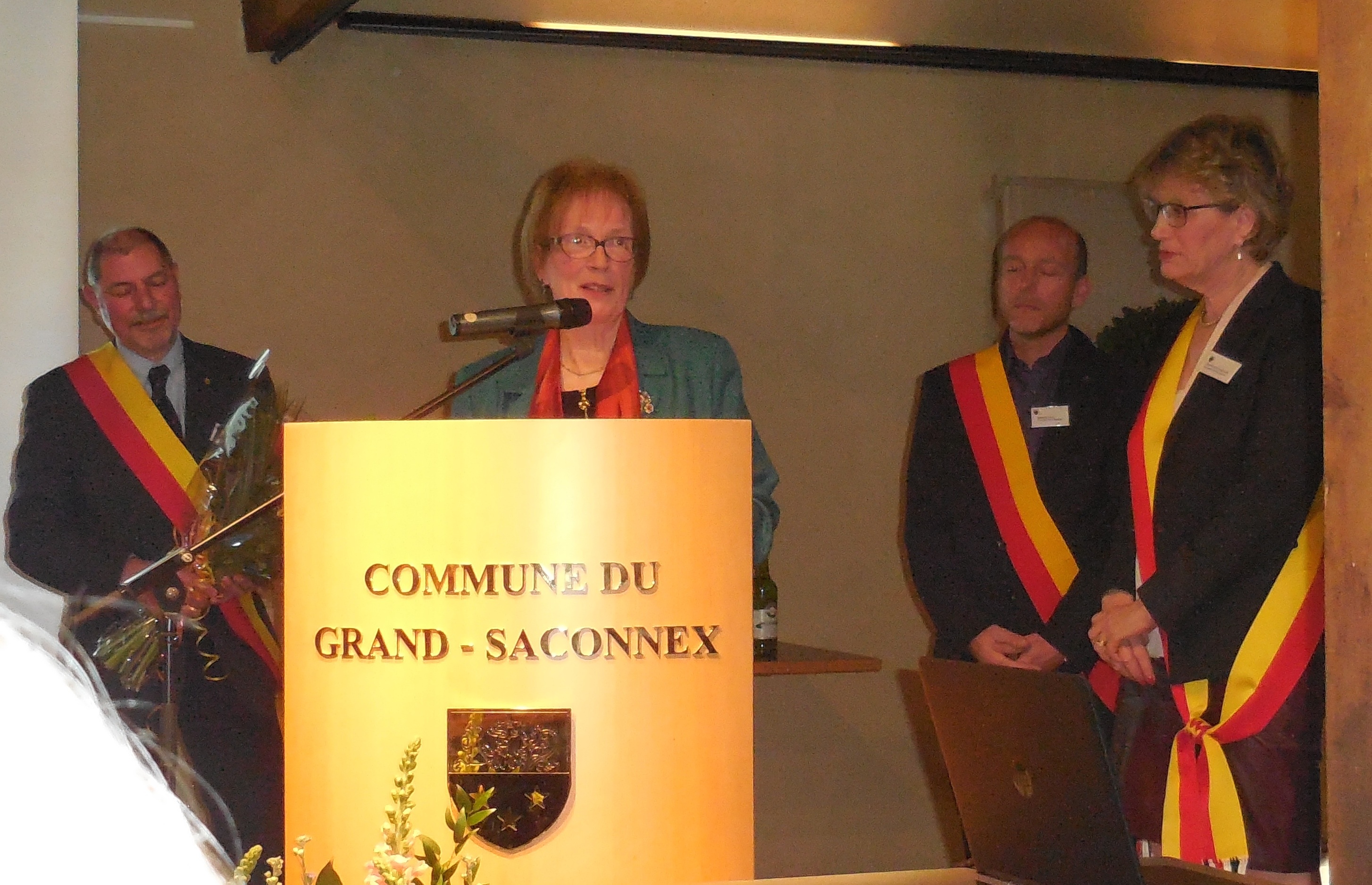
Age Esteem abounded last night at an annual event in Grand-Saconnex, one of municipalities of Geneva, Switzerland when they awarded the “Mérite saconnésien”. It is a ceremony to award local citizens for the outstanding contribution they have made to the local community or to the world.

My dear friend Heli Bathija received this award for her work to save babies in Afghanistan. Heli is a medical doctor who retired from her career at the World Health Organization several years ago. Retirement gave her the opportunity to redirect her energies and experience to new areas of interest. One of these interests led her to found Hope For The Babies (HOBI).

The idea is simple, yet life changing and life saving. The mortality rate of newborn babies in Afghanistan is extremely high. This is for two reasons: 1) Mothers usually give birth at home in disastrous hygienic conditions. 2) Hypothermia. The babies die from the cold.

Dr. Bathija’s prevention was simple. Offer warm sweaters for the babies of mothers who come to the local health centers to give birth. It results in the mother giving birth in more sanitary conditions and the baby is kept warm.

Since Dr. Heli Bathija had lived and worked in Afghanistan, she had good contacts to make this happen. But where would all those sweaters come from? – From knitters, of course! So she set out to find women and men who knit, beginning with the knitting club in her own community. Today she has knitters in many parts of the world, including France, Canada, U.K., Finland…as well as many people contributing wool and money to help it happen.

DSCN0468

Heli Bathija is a living example of age esteem, proving it is never too late to launch a new idea or to make a lasting difference. Through her age esteem she is enhancing the course of lives, not only of mothers and babies, but also of people who knit with a purpose – to give a fair chance to a newborn.

At this same ceremony, the knitting group of Grand-Saconnex also received the “Mérite saconnésien” for their outstanding contribution through the knitting of countless sweaters, blankets and bonnets for the newborns in Afghanistan. Without these dedicated women using their creative talents, Hope For The Babies may not have taken off in such a dynamic way, stimulating interest from other like groups.

Knitting group w:authorities

Here, too, Age Esteem was evident since the knitters were elders in the community. Their leader, in light green in the above photograph, is 92 years old. She, and the other women in this group, are beautiful models of age esteem. It showed through their energy, relationships to others in the community and their commitment to making a difference.

Bonnie Fatio


Happy International Day of Older Persons

October 1st, 2013 Comments off

AgeEsteemHappy International Day of Older Persons

“The world population is rapidly ageing. Between 2000 and 2050, the proportion of the world’s population over 60 years will double from about 11% to 22%. The absolute number of people aged 60 years and over is expected to increase from 605 million to 
2 billion over the same period.” (World Health Organization)

Age is not what it used to be.  We are living longer and fuller lives. Age-esteemers know there are joys to being an older person. Age-esteemers continue to contribute their expertise and talents to the world. Age-esteemers love, laugh and make the most of what they have.

Join AgeEsteem® in celebrating this day of recognition for the contributions of older people.

Bonnie Fatio

How Do You Define Health?

May 28th, 2013 Comments off

Healthy

How Do You Define Health?

How do you define health?  If we wish to be healthy as we age we need to define what it means. The definition given below is also a good definition of  age-esteem. – The difference being that you can have age-esteem even in the presence of disease.  Age-esteem is dependent on a positive attitude toward life in all circumstances.

Health is a state of complete physical, mental and social well-being and not merely the absence of disease or infirmity.

World Health Organization-1948


Global Network of Age-friendly Cities

October 28th, 2010 Comments off

city

In June of this year Dr. John Beard, Director of the World Health Organisation’s (WHO) Department on Aging and Life Courses, announced the launch of the Global Network of Age-friendly Cities.

Research from 33 cities, confirmed the importance for older people of access to public transport, outdoor spaces and buildings, as well as the need for appropriate housing, community support and health services and the need to foster the connections that allow older people to be active participants in society, to overcome ageism and to provide greater opportunities for civic participation and employment.

This is aligned with the vision of AgeEsteem of “a society where people of all ages are respected as contributing members of society”.   I was privileged to meet with Dr. Beard following my talk on Age Esteem at the WHO headquarters in Geneva last month to discuss our common concerns around issues of aging.  Very energizing and encouraging.

Bonnie Fatio

AgeEsteem At The WHO

September 5th, 2010 Comments off

Bonnie Fatio

Bonnie Fatio, founder of AgeEsteem, will speak at the World Health Organization (WHO) in Geneva, Switzerland on Does Age Matter? on September 7.

Age is important to the work of the WHO.  In 2007 WHO created the Department of Ageing and Life Course (ACL).  ACL focuses on helping people to realize their potential for physical, social, and mental well-being throughout the life course and to participate in society, while providing them with adequate protection, security and care when they need it.

AgeEsteem is aligned with the WHO in its focus to help people to realize their potential.  Age esteem is an essential element to remaining healthy and reaching your potential as you age no matter where on our globe you live.

World Health Day

April 7th, 2010 Comments off

World Health Day

This year’s World Health Day is focused on making cities healthier.

As the World Health Organization (WHO) states, « There are solutions.  Urban planning can promote healthy behaviours and safety through investment in active transport, designing areas to promote physical activity and passing regulatory controls on tobacco and food safety. Improving urban living conditions in the areas of housing, water and sanitation will go a long way to mitigating health risks.  Building inclusive cities that are accessible and age-friendly will benefit all urban residents.

Such actions do not necessarily require additional funding, but commitment to redirect resources to priority interventions, thereby achieving greater efficiency. »

Excesses and Deficiencies

August 25th, 2009 Comments off

healthy fruit

Nourishing Factors

What do you feed your body?  Do you nourish it, starve it, or overload it?

A balanced diet is essential to our age-esteem and self image.  An important aspect of how we feel about ourself, whether we lack energy and feel old or are alert and dynamic is the food we eat.

At a recent luncheon I attended  Dr. Margaret Chan, Director-General of the World Health Organization, emphasized the importance of eating healthfully to an audience of fairly affluent diners.  A trend that is influencing health in the 21st century is the globalization of unhealthy lifestyles.

We are dealing with excesses and deficiencies.   It isn’t because we have a full plate that it is not lacking in the nutrients that we need.  Add to this the men and women who starve themselves to be size 0 and who are depriving their bodies of necessary aliments.  Then on the other side we have the overweight and obese who are also missing the right nutrients even though they eat plenty.

When in doubt, add fruits, vegetables, lean meats and fish.  They are good for your health and nourish your age-esteem.